We use cookies to make your experience better. To comply with the new e-Privacy directive, we need to ask for your consent to set the cookies. Learn more.


Why ADAS Is The Future For Your Garage Equipment Range


ADAS (Advanced Driver Assistance Systems) are the cameras, radar and sensors built into modern vehicles to help drivers avoid collisions. Nearly every new car sold in the UK in 2026 has ADAS fitted as standard. For UK garages, this means ADAS calibration equipment is no longer optional — any workshop that does windscreen replacement, wheel alignment, suspension work or accident repair needs the ability to recalibrate ADAS systems before a vehicle leaves the bay.
Key Points at a Glance
-
What ADAS is: A suite of safety systems including Autonomous Emergency Braking, Lane Keep Assist, Adaptive Cruise Control and Blind Spot Monitoring
-
Why it matters now: Following the EU General Safety Regulation (GSR2) in July 2024, ADAS is fitted to virtually all new vehicles entering UK workshops
-
What triggers a recalibration: Windscreen replacement, wheel alignment, suspension work, bumper removal, accident repair, or sensor replacement
-
What garages need: A calibration frame, manufacturer-specific targets, a diagnostic platform, accurate wheel alignment equipment, and a level workshop floor
-
Two calibration methods: Static (indoors, with targets) and dynamic (on-road, with diagnostics) — most vehicles need both
-
Time per job: 30-90 minutes for static calibration, plus a road test for dynamic
-
Typical equipment investment: £10,000 to £30,000+ depending on coverage and manufacturer support
If you're running a workshop in 2026 and you haven't thought seriously about ADAS calibration equipment yet, you're already behind the curve. Nearly every car coming into your bay now has some form of ADAS system fitted, and the moment a wheel is aligned or a bumper is removed, those systems need recalibrating.
At JHM Butt, we've been kitting out UK garages for over 50 years. In that time, we've watched the automotive industry shift from carburettors to EVs, but the ADAS revolution is the biggest change we've seen in workshop service requirements, and it's happening right now, in your bay.
Here’s what you need to know.
What is ADAS?
ADAS stands for Advanced Driver Assistance Systems. These are the cameras, radar units, ultrasonic sensors and lidar arrays built into modern vehicles to help drivers avoid collisions and stay in lane. Common ADAS features include:
-
Autonomous Emergency Braking (AEB) - applies the brakes automatically to prevent a collision
-
Lane Departure Warning (LDW) and Lane Keep Assist (LKA) - alerts the driver or steers the car back if it drifts out of lane
-
Adaptive Cruise Control (ACC) - maintains a set distance from the vehicle ahead
-
Blind Spot Monitoring (BSM) - warns of vehicles in the driver's blind spot
-
Traffic Sign Recognition (TSR) - reads road signs and displays them on the dashboard
Since July 2024, under the EU General Safety Regulation (GSR2), a range of ADAS features became mandatory on all new vehicles registered in the EU. UK-sold vehicles are built to the same specification in practice, because manufacturers don't produce separate lower-spec models for the UK market. The result: nearly every new car arriving in UK workshops now has ADAS fitted as standard.
Why ADAS Calibration Matters for Your Garage
An ADAS system only works if its sensors are aimed exactly where the manufacturer intended. We're talking millimetres of tolerance. The moment something disturbs that alignment, and there are far more triggers than most garage owners realise, the system needs recalibrating before the vehicle leaves your workshop.
Common jobs that trigger an ADAS recalibration:
-
Windscreen replacement (forward-facing camera lives behind it)
-
Wheel alignment or four-wheel geometry
-
Suspension work or ride height changes
-
Bumper removal or replacement
-
Accident repair, however minor
-
Camera, radar or sensor replacement
If you send the car out without recalibrating, the ADAS system can misread the road, and that's a safety and liability issue you don't want sitting on your books. Insurance companies, manufacturers and Thatcham are all tightening expectations on this, and customers are starting to ask the right questions.
In short: if you can't calibrate ADAS, you're turning work away or sending it down the road to a competitor who can.
What Does Your Garage Actually Need?
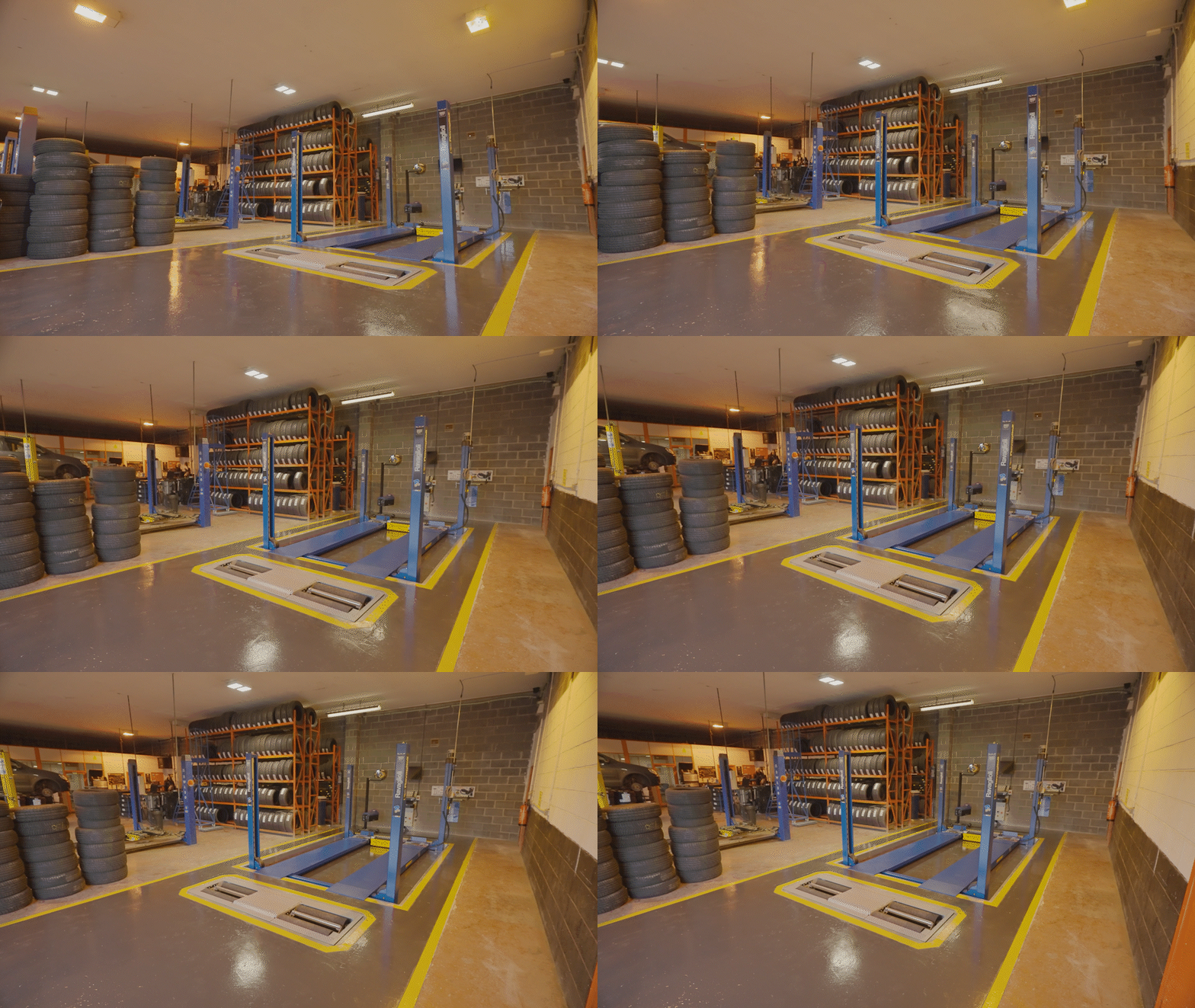
A proper ADAS bay isn't just one piece of kit, it's a setup. Here's what most workshops need to handle the bulk of UK rolling stock:
-
A calibration frame or rig: the structure that holds calibration targets at the correct height, distance and angle from the vehicle
-
Manufacturer-specific target sets: the printed panels and reflectors each carmaker requires (a system that supports multiple manufacturers from a single rig saves serious money)
-
A diagnostic platform: to communicate with the vehicle's ECU and run the calibration procedure
-
Accurate wheel alignment equipment: because most ADAS calibrations require the vehicle's thrust angle and geometry to be set correctly first
-
Space and a level floor: non-negotiable; an out-of-level floor will throw every calibration off
What Can Your Garage Do?
Here are some actionable steps you can take to embrace the world of ADAS:
-
Training & Development: Invest in training courses for your technicians, specifically those focused on ADAS calibration, diagnostics, and repair. Many garage equipment manufacturers and suppliers offer training programs, or you can look into certifications from organisations like the Institute of the Motor Industry (IMI).
-
Research & Investment: Stay updated on the latest ADAS technologies by attending industry events, subscribing to relevant publications, and researching online resources. Consider investing in diagnostic tools and software specifically designed for ADAS systems.
Building Customer Trust: Communicate openly with your customers about ADAS. Explain the benefits and limitations of these systems and offer advice on maintaining them for optimal performance.
Frequently Asked Questions
Do all garages need ADAS calibration equipment? If you're doing windscreens, alignment, bodywork or accident repair, yes, increasingly so. General service and MOT-only operations can refer ADAS work out, but you're handing margin and customer relationships to competitors.
How much does ADAS calibration equipment cost? It varies enormously, from entry-level setups around £10,000 to comprehensive multi-manufacturer systems north of £30,000. The right answer depends on the work you do and the vehicles you see most often. Get in touch and we'll talk through what makes sense for your workshop.
Can I do ADAS calibration without the manufacturer's equipment? Aftermarket ADAS systems from reputable suppliers calibrate the same vehicles the dealer network handles, often at a fraction of the cost. The key is buying from a supplier who keeps the software updated and provides proper training.
How long does an ADAS calibration take? Most static calibrations take 30-90 minutes once the vehicle is positioned correctly. Dynamic calibrations add a road test on top. Budget an hour minimum per vehicle when you're quoting customers.
Is ADAS calibration the same as wheel alignment? No, but you can't do one properly without the other. ADAS calibration assumes the vehicle's geometry is correct; if the alignment is out, the calibration will be too.
Ready to Get Your Workshop ADAS-Ready?
We've been helping UK garages invest in the right equipment for over 50 years, and ADAS is where the smart workshops are putting their money right now. If you want to talk through what ADAS calibration equipment makes sense for your bay, your budget and your customer base, we're here.
Speak to our team on 01302 710868 or email and we'll help you build a setup that pays for itself.
April 21, 2025
|
View: 962
|
Categories: Blog
|
By: <a class="mp-info" href="https://www.jhmbuttco.com/blog/author/admin">Admin</a>
About the Author


What are Coil Spring Compressors?
April 21, 2023

Your Full Guide to MOT Ramps
June 6, 2022


The Requirements Needed For an MOT Bay
July 19, 2023

The Garage Jobs Worth Bringing In-House in 2026
September 3, 2026

MOT “Photos at Test” Begins: What Garages Need to Know
August 4, 2026