We use cookies to make your experience better. To comply with the new e-Privacy directive, we need to ask for your consent to set the cookies. Learn more.


Installation, Calibration, Service & Repairs
Installation, Calibration, Service & Repairs
JHM Butt & Co Ltd installs, calibrates, services and repairs garage equipment across the UK. We cover site surveys and CAD layouts, full installation and commissioning, DVSA calibration of MOT testing equipment, LOLER thorough examination of vehicle lifts, and breakdown repairs. We have been doing it since 1971.
Key Points
- Brake testers and headlamp aim testers must be calibrated at least every 6 months, and since 1 April 2023 this can no longer be done by your own staff.
- Vehicle lifts need a LOLER thorough examination at statutory intervals, separately from MOT calibration.
- We handle the whole chain: site survey, CAD layout, project management, installation, commissioning and ongoing servicing.
- Service contracts keep calibration dates tracked so a certificate does not expire mid-week.
- Call 01302 710868 to book a calibration, a service visit or a repair.
How Often Does MOT Testing Equipment Need Calibrating?
The DVSA sets the intervals, and missing one can put your testing authorisation at risk. In broad terms:
- Roller brake testers and plate brake testers: at least every 6 months.
- Headlamp aim testers: at least every 6 months.
- ATL and motorcycle weighing facilities: at least every 6 months.
- Exhaust gas analysers and diesel smoke meters: annually, by a UKAS-accredited technician.
- Decelerometers: annually.
- Salter brake testers: at intervals not exceeding 2 years.
For brake testers, plate brake testers, ATL weighing facilities and headlamp aim testers, the DVSA treats the calibration expiry date as the end of that month. A certificate expiring on 15 July is treated as valid to 31 July.
Intervals are minimums, not targets. You can recalibrate at any point inside the window, and it is worth doing early rather than letting a certificate run to the last week. Always check the current MOT testing guide for your specific equipment.
Can I Calibrate My Own MOT Equipment?
No, not for brake testers and headlamp aim testers. Since 1 April 2023, the DVSA no longer accepts calibration of brake testers or headlamp aim testers carried out by vehicle testing station staff. It has to be done by the original equipment manufacturer or an accredited calibrator.
Exhaust gas analysers and diesel smoke meters must be calibrated by a UKAS-accredited technician.
This is the change that catches sites out, particularly those that handled it in-house for years. If you are not certain who last calibrated your equipment or when the certificate expires, get in touch and we will go through it with you.
What Is a LOLER Thorough Examination, and Does My Lift Need One?
LOLER is separate from MOT calibration, and a lot of workshops conflate the two. Under the Lifting Operations and Lifting Equipment Regulations 1998, lifting equipment must be thoroughly examined by a competent person at regular intervals: at least every 6 months for equipment used to lift people and for lifting accessories, and at least every 12 months for other lifting equipment, or in line with a written scheme of examination drawn up by a competent person.
A thorough examination is also required before equipment is used for the first time, after installation at a new site or relocation, and following exceptional circumstances such as collision damage.
For vehicle lifts specifically, BS 7980 gives guidance on appropriate frequencies, and the manufacturer will usually specify their own. Many workshops run vehicle lifts on a 6-monthly examination regardless, because of how they are used in practice. If you are unsure which interval applies to your lift, ask us and we will tell you what your equipment and your written scheme require.
Worth being clear on one point: responsibility for LOLER compliance sits with the owner of the equipment, not with the company carrying out the examination.
What Happens During a Site Survey?
Every installation starts with someone coming to look at the space. We measure the bay, check ceiling height, floor construction, power and air supply, drainage and vehicle access, and we ask how you actually work, because the right lift for a busy MOT lane is not always the right lift for a servicing bay.
The survey is where problems surface cheaply. Insufficient slab depth for a 2-post lift, a roller shutter that fouls a raised vehicle, a bay too short for the test lane you had in mind. Finding these on site costs an hour. Finding them on installation day costs considerably more.
Why Do You Produce CAD Drawings Before Installation?
The CAD drawing turns the survey into a layout everyone can agree on before anything is ordered. It shows where each piece of equipment sits, how vehicles move through the workshop, and how much working space a technician has around a raised car.
For MOT bays this matters more than most, because the layout has to satisfy DVSA requirements as well as work day to day. Changing a drawing is free. Moving a lift that is already bolted to the floor is not.
Who Manages the Installation?
You get a single point of contact who coordinates the schedule, the engineers, the deliveries and the sign-off, including health and safety. Where a project involves groundworks, electrical supply or other trades, we coordinate around them rather than leaving you to referee between suppliers.
Our project engineers handle the technical side, from equipment selection through to commissioning, and are there to resolve the problems that only show up once installation starts.
What Equipment Do You Service and Repair?
We service, calibrate and repair the equipment we supply and equipment supplied by others, including:
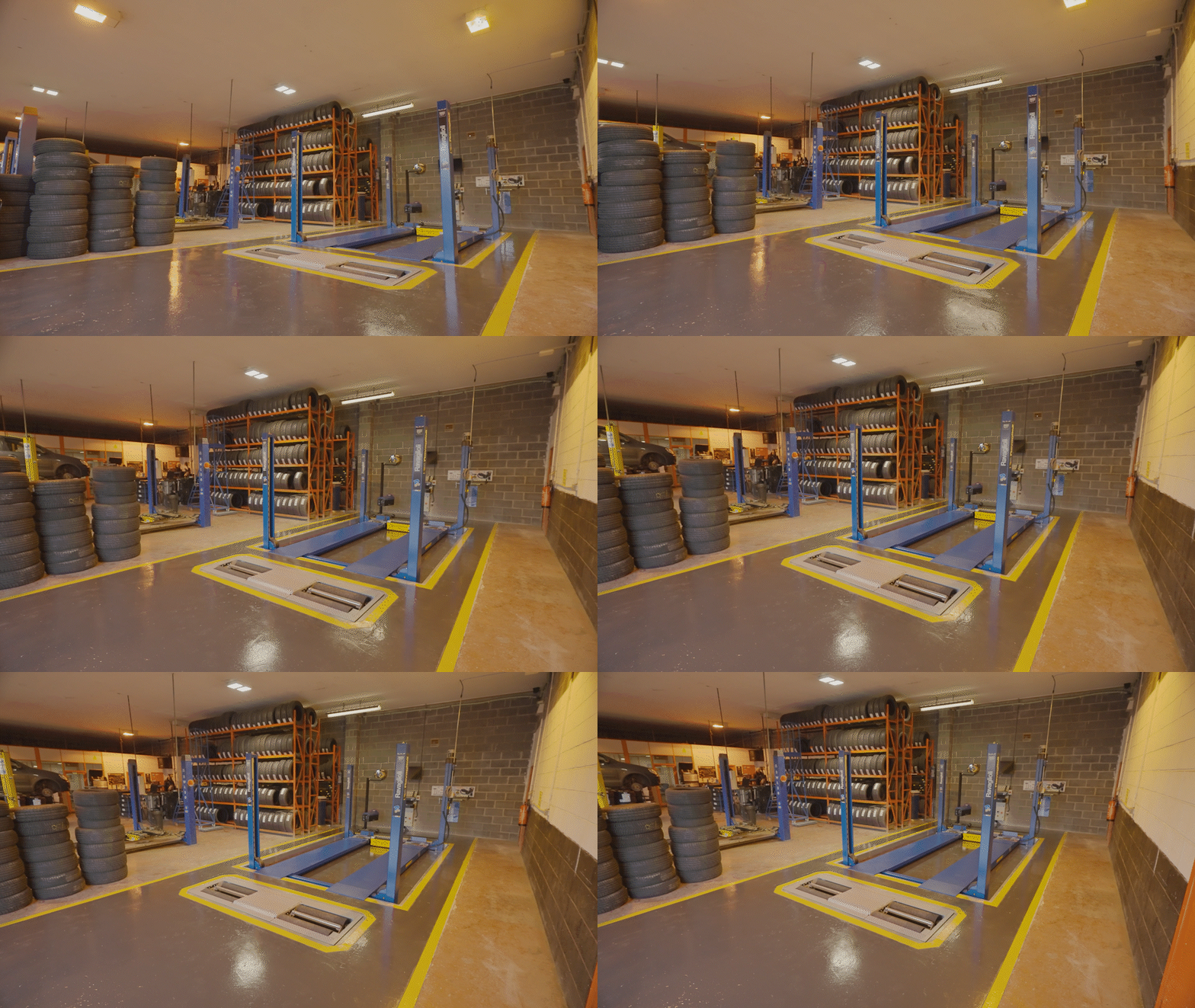
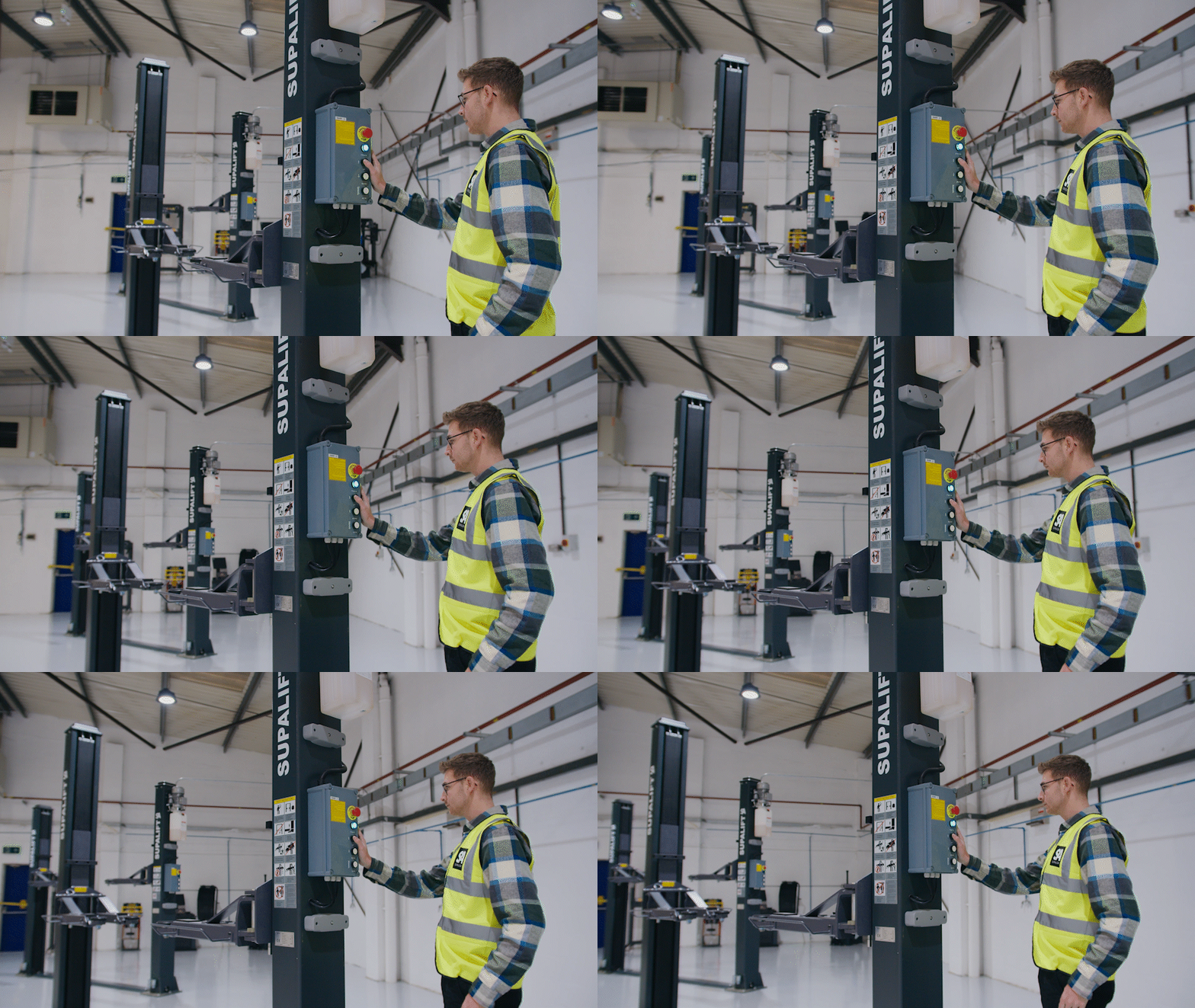
- Two-post, four-post and scissor vehicle lifts
- Roller brake testers
- Headlamp beam testers
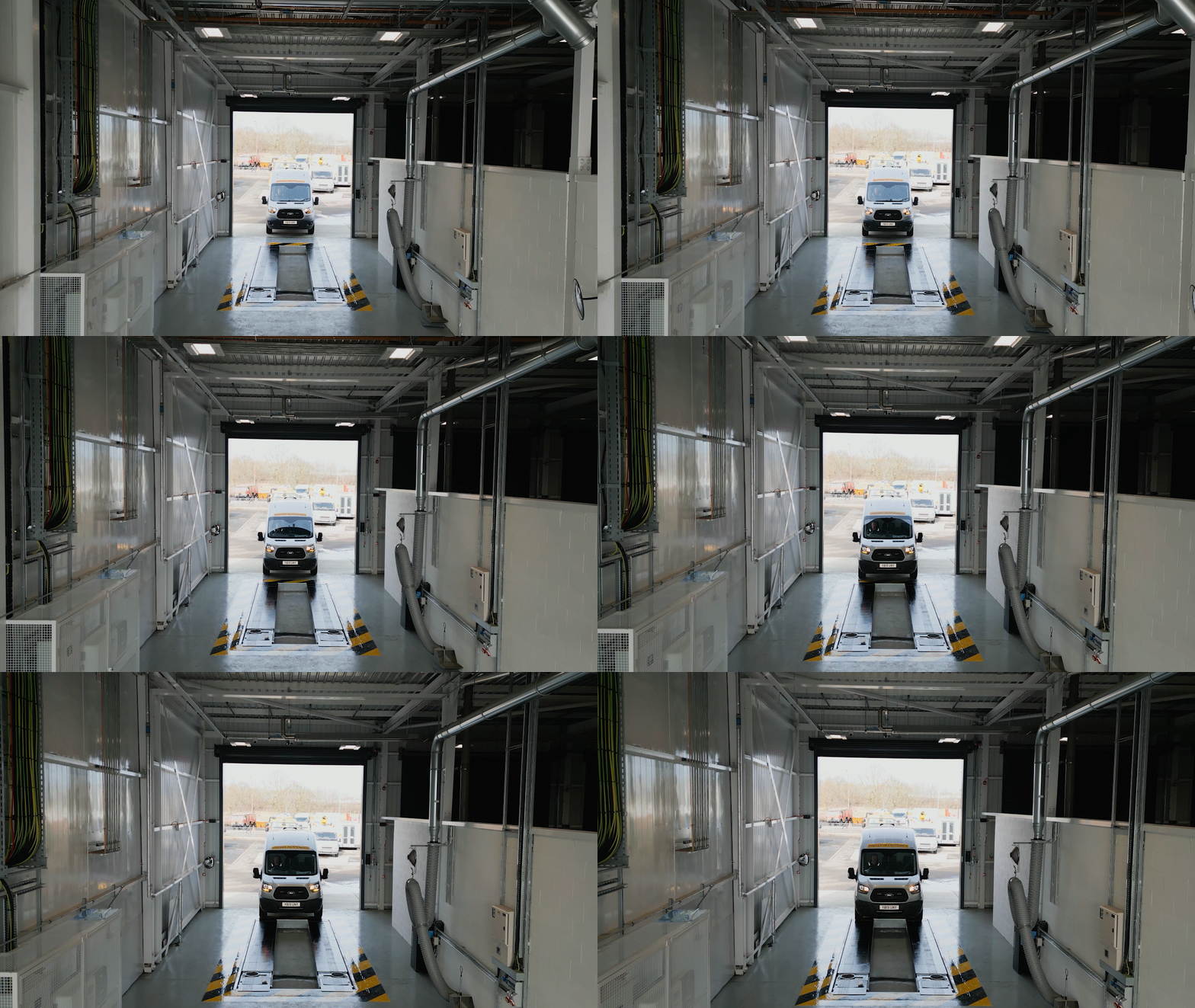
- MOT test lanes, Class 4 and Class 7
- Exhaust gas analysers and diesel smoke meters
- Wheel alignment systems
- Tyre changers and wheel balancers
- Air conditioning regassing machines
- Jacking beams, compressors and general workshop equipment
What Does a Service Contract Cover?
A service contract means your calibration and examination dates are tracked for you and visits are scheduled in advance, rather than you noticing an expiry date the week it runs out.
It also means the engineer attending knows your site and your equipment, rather than arriving cold.
Contracts run from 12 months upwards and cover all types of garage equipment, not only MOT kit. As a general pattern we work to 6-monthly checks, with the detail built around what you run and how hard you run it.
Do You Repair Equipment You Did Not Supply?
Yes. We service and repair equipment from a range of manufacturers, not only the brands we sell. If you have inherited a workshop full of mixed kit, we can take on the maintenance for all of it.
Where Do You Cover?
We are based at Brunel Close, Brunel Industrial Estate, Harworth, DN11 8QA, which puts us close to Doncaster, Worksop, Retford, Sheffield and Rotherham. We cover the whole of the UK, so wherever your workshop is, we can get an engineer to you.
Frequently Asked Questions
How often does a roller brake tester need calibrating?
At least every 6 months, and since 1 April 2023 the calibration must be carried out by the original equipment manufacturer or an accredited calibrator rather than by your own staff.
How often does a headlamp aim tester need calibrating?
At least every 6 months, under the same rule on who may carry it out.
When does a calibration certificate actually expire?
For brake testers, plate brake testers, ATL and motorcycle weighing facilities and headlamp aim testers, the DVSA treats the expiry as the end of the month shown on the certificate.
Is a LOLER examination the same as an MOT calibration?
No. They are separate requirements. LOLER covers the safety of lifting equipment and applies to your lifts whether or not you carry out MOT testing. Calibration covers the accuracy of measuring equipment used in MOT testing.
Who is responsible for LOLER compliance?
The owner of the equipment. Using an external company for thorough examinations does not transfer that responsibility.
Can you install equipment bought elsewhere?
Yes. Our engineers install equipment supplied by other companies as well as our own. We would always rather supply it too, because it keeps the specification, the installation and the aftercare with one team, but a machine bought elsewhere is not a problem.
How quickly can you attend a breakdown?
Where a breakdown is urgent we will usually get to you within the same week. It depends on where you are and what our engineers are already committed to, so call us and we will tell you honestly when we can be there.
Book a Calibration, Service or Repair
Whether you need a one-off calibration before a certificate expires, a full workshop fit-out, or someone to look after the equipment you already have, we can help.
Call 01302 710868 or get in touch and we will get an engineer booked in.