We use cookies to make your experience better. To comply with the new e-Privacy directive, we need to ask for your consent to set the cookies. Learn more.


What Type of Wheel Alignment Machine Does Your Garage Actually Need?


If you've spent any time looking at a new wheel alignment machine for your workshop, you'll know the choice isn't as simple as "pick one and plug it in." Prices range from a few hundred pounds for a basic laser gauge to £20k for a premium digital wheel alignment machine. This can cause some confusion for garage owners because they're stuck in analysis paralysis deciding what alignment machine is best for them.
The truth is the right wheel aligner machine depends on the work you do, the volume you push through, the vehicles you handle, and how much margin you want wheel alignment to generate over the next ten years, not just the next twelve months.
This guide breaks down what actually matters when choosing.
Why this decision matters more than people think
Wheel alignment is one of the highest-margin services a workshop can offer. It's also one of the most visible, get it wrong and you'll have comebacks, uneven tyre wear complaints, and customers who don't return.
The wheel alignment machine you choose affects three things every day:
-
How fast you can turn a job around (and therefore how many you can do)
-
How accurate and repeatable your wheel alignment results are
-
How confident your technicians feel quoting and selling alignment
A cheap aligner that's slow, fiddly, or inconsistent will cost you more in lost time and lost customers than a proper machine would have cost in the first place. But equally, over-spec'ing a premium digital wheel alignment machine for a low-volume independent doesn't make sense either. The job is to match the kit to the work.
The Main Types Of Wheel Alignment Equipment
Before looking at workshop fit, it helps to understand what's actually on the market.
Optical laser gauges are the entry point. Systems like the Supalign 2-Wheel Optical Laser Aligner project a laser line between mirrored gauges fitted to the front wheels, giving you a fast toe-in/toe-out reading without any electronics, software, or cabling. They're affordable, almost indestructible, and brilliant for quick wheel alignment checks. They won't replace a full geometry machine, but for workshops that just want to verify alignment as part of a service or tyre fit, they earn their place on the wall.
Modern CCD aligners are the mainstream choice for most professional workshops, and deliver fully accurate, repeatable measurements across toe, camber, caster, and thrust angles. They use infrared sensors mounted to clamps on each wheel, but the latest generation has come a long way from the dated, cable-heavy kit of a decade ago. The Ravaglioli TD2.0 WIFI, for example, is a tablet-controlled, completely wi-fi digital wheel alignment machine with no fixed console, meaning the technician can move freely around the vehicle, and the machine can be repositioned to suit any workshop layout. Redesigned 8CCD measuring heads deliver fast, repeatable results, and the system emails alignment reports straight to the customer. For most independents and multi-bay garages, this is the wheel aligner equipment that hits the right balance of capability, flexibility, and value.
Camera-based 3D aligners sit at the top of the digital wheel alignment machine market. They use overhead or post-mounted cameras to track lightweight targets fixed to each wheel, no electronics on the clamps, nothing fragile to damage, and faster setup than CCD systems can match. Premium systems like the Ravaglioli 6-camera digital wheel alignment machine measure all four wheels simultaneously in real time, with vehicle setup in minutes. The advantage over modern CCD isn't accuracy, both technologies measure to professional standards. It's speed, durability, live-readout convenience, and advanced features like rolling-radius compensation and custom suspension geometry handling. For high-volume tyre shops and specialist workshops where every minute on the ramp counts, this is the wheel alignment machine to invest in.
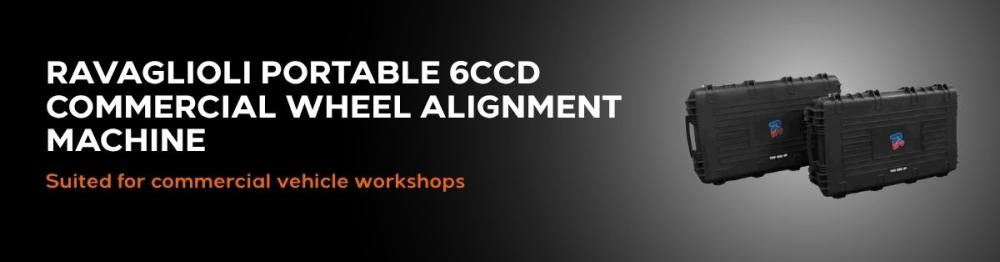
Portable commercial vehicle aligners are a category of their own. Built specifically for trucks, buses, and HGVs, they use lowered CCD measuring heads, ruggedised tablets, and transport cases that allow the entire system to be moved between depots, used roadside, or stored compactly between jobs. The Ravaglioli RAVTD6000TB.3 wheel alignment machine is a portable 6CCD commercial wheel alignment machine designed exactly for this work, and there's no overlap with passenger-car kit, because commercial vehicles need different clamps, different geometry, and different procedures.
Matching the wheel alignment machine to your workshop
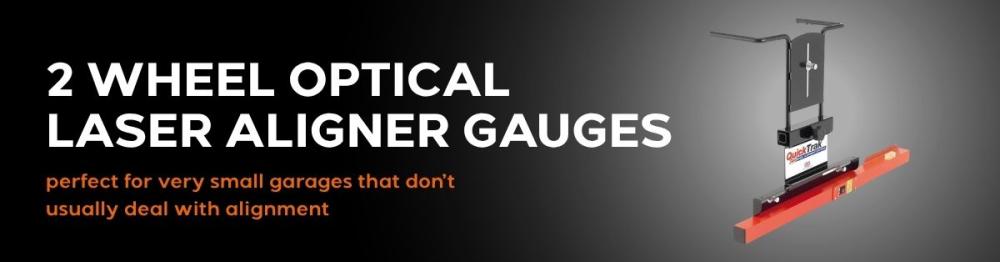
Small independent garages
If you're running a one- or two-bay independent, your options come down to budget and ambition.
If wheel alignment isn't a service you actively sell, but you'd like the ability to check toe quickly during a service, after a steering or suspension repair, or as part of a tyre fit, a 2-wheel optical laser gauge is a smart, low-risk purchase. It costs a fraction of a full wheel alignment machine, takes up almost no space, and gives you a defensible "we checked your alignment" answer to add to the invoice.
If alignment is, or could be, a proper revenue line, step up to a modern digital wheel alignment machine. The TD2.0 WIFI is a particularly strong choice for independents, the wi-fi, tablet-controlled setup means you don't need to dedicate a bay to a fixed console, and the machine can adapt to the space you've actually got rather than the space the manufacturer assumed you had. Setup is quick, the interface is straightforward, and the emailed customer reports make a professional impression that helps justify the price of every alignment job.
Multi-bay general garages
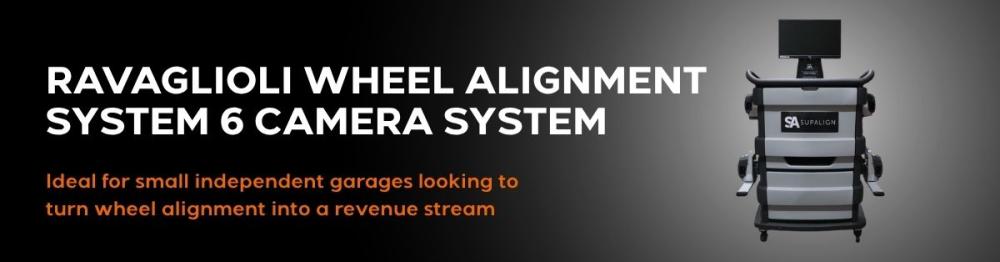
If you're running three or more bays and wheel alignment is a regular part of your mix, say a handful of jobs a day, you've got two strong options to consider: The tablet controlled wheel alignment machine (TD2.0 WIFI) or the Ravaglioli 6 camera computerised wheel alignment machine.
The tablet controlled TD2.0 WIFI wheel alignment machine’s flexibility is genuinely useful at this scale. No fixed console means the wheel aligner machine isn't tying up a single bay, you can move it where the work is. Wi-fi communication between the measuring heads means no cables to manage, no trip hazards, and no sensor cables to replace when somebody catches one with a trolley jack. The tablet-based interface is faster to learn than older console systems, which matters when you're training newer techs.
The customer-facing side matters too. Emailed alignment reports with a vehicle photograph aren't just a nice touch, they're a sales tool. Customers who can see the before-and-after readings are far more likely to come back for the next alignment, and to accept the suspension or steering work that goes with it.
If alignment is a serious revenue line for the business, or you're looking to position it as a premium service, the Ravaglioli 6-camera computerised wheel alignment machine is the step up. Camera-based measurement means faster vehicle setup, simultaneous four-wheel readings, and a live on-screen interface that's hard for customers not to be impressed by when they see it on the ramp. It's the same wheel alignment machine you'll find in high-volume tyre shops and specialist workshops, choosing it for a multi-bay general garage signals serious intent on alignment.
A laser gauge can still earn its keep alongside either machine, working as a secondary check tool at the tyre bay and freeing up the main alignment ramp for billable jobs.
High-volume tyre shops and fast-fits
Volume changes everything. If you're doing 15+ alignments a day, every minute saved per job compounds into real money, and into ramp availability for the next customer waiting.
This is where a premium camera wheel alignment machine genuinely earns its price tag. A 6-camera 3D digital wheel alignment machine like the Ravaglioli measures vehicles in minutes. There's no clamp sensor setup time, minimal recalibration after a knock, and the live readout means adjustments happen on the ramp without the tech walking back and forth to a console.
At your kind of volume, that speed advantage pays itself back faster than any other piece of workshop kit. Many high-volume shops also keep a laser gauge handy for the "quick toe check before we book you in" conversation at the tyre bay, a small spend that generates booked-in alignment jobs.
Bodyshops and accident repair centres
Bodyshops have a different relationship with wheel alignment than most workshops; it's not a revenue line, it's a job-completion requirement. After almost any collision repair involving suspension, steering, or chassis work, the vehicle needs a four-wheel alignment before it goes back to the customer. Skip it and you're risking comebacks, insurance disputes, and customer complaints about pull or tyre wear.
The two real options for bodyshops are owning the kit or outsourcing the job. Outsourcing adds days to turnaround times, eats margin, and means a finished car sitting waiting on a third-party booking. Owning a TD2.0 WIFI Wheel alignment machine in-house means alignment happens the moment the repair is finished, vehicle out the door, insurer signed off, customer collected on schedule.
The wi-fi, no-fixed-console setup of the TD2.0 WIFI works particularly well for bodyshops, where alignment isn't an everyday job, and the kit needs to share space with other repair equipment.
Specialist and performance workshops
Performance, prestige, and motorsport work demand a different set of features. Vehicles often have non-standard specs, adjustable suspension setups, corner-weighting requirements, or custom rolling-radius considerations. A standard alignment procedure isn't enough, you need a machine that can store and recall custom specs, handle very fine-resolution adjustments, and provide the detailed reporting that prestige customers expect to see.
For this kind of work, a camera-based wheel aligner machine like the Ravaglioli 6-camera system delivers the measurement modes, custom spec handling, and rolling-radius compensation that performance work needs. It's widely used in specialist and prestige workshops for exactly these reasons.
Commercial vehicle workshops and mobile fleet services
If you're aligning trucks, buses, or HGVs, none of the kit above is the right answer. Commercial vehicle wheel alignment has its own requirements: lowered measuring heads to clear truck wheel arches, heavy-duty clamps sized for commercial rims, multi-axle measurement, and procedures designed for the realities of working on something the size of a coach.
The Ravaglioli RAVTD6000TB.3 is a portable 6CCD commercial wheel alignment machine built specifically for this work. The whole system packs into two heavy-duty wheeled transport cases, which opens up a business model fixed alignment kit simply can't: mobile fleet services, depot visits, and roadside work all become viable. Bluetooth and infrared data transmission between the measuring heads and the ruggedised Windows tablet means the system works reliably in challenging lighting and depot conditions, not just under workshop lights.
For a fixed commercial vehicle workshop, the same kit gives you a fast, professional alignment capability without committing a bay to a permanent installation. For a mobile alignment service or a multi-depot fleet operator, the portability is the whole point, you bring the wheel alignment machine to the vehicle, not the other way round.
Quick wheel alignment machine comparison

What else to factor in beyond the wheel alignment machine itself
The aligner is only part of the equation. A few things workshops often overlook:
-
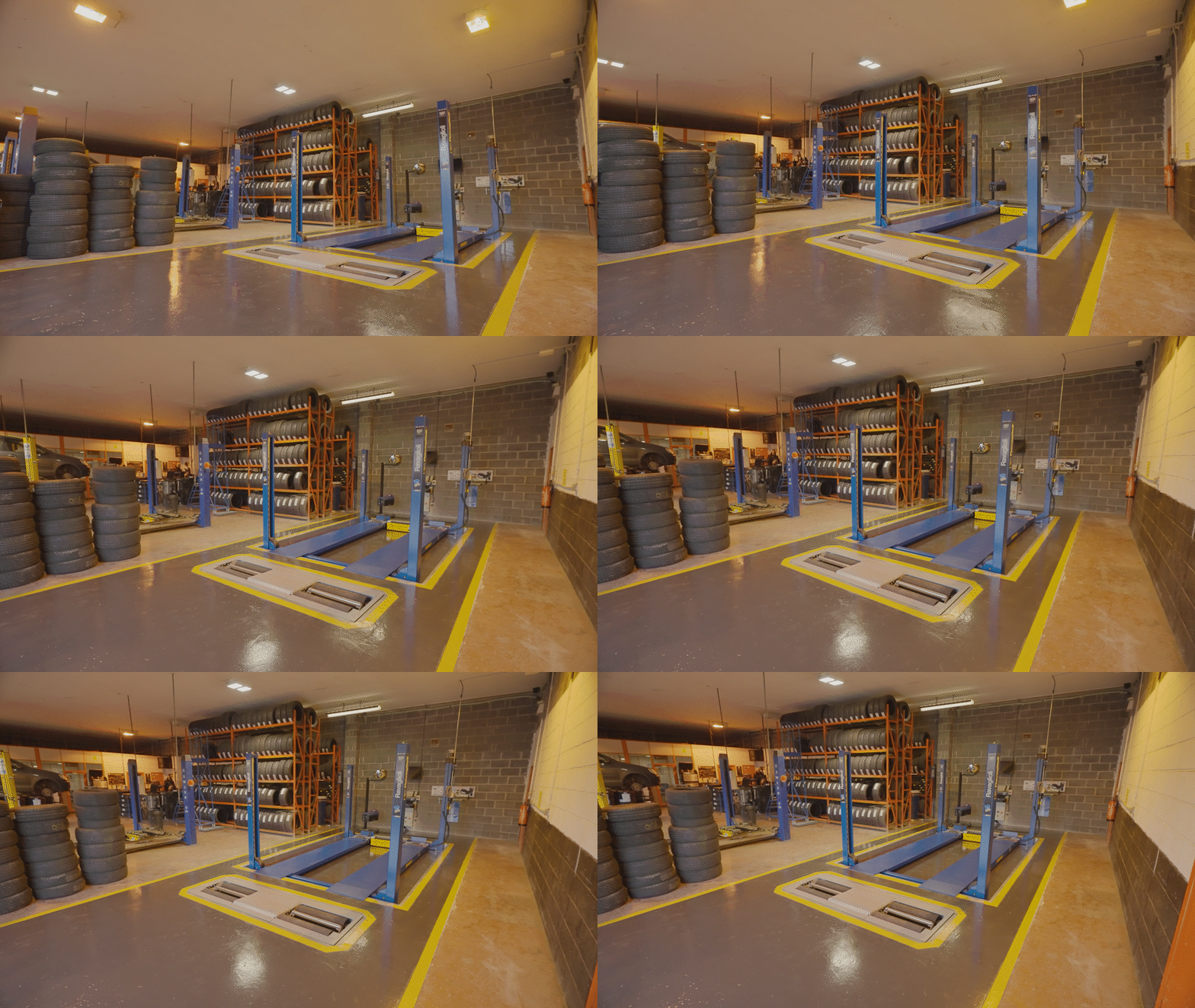
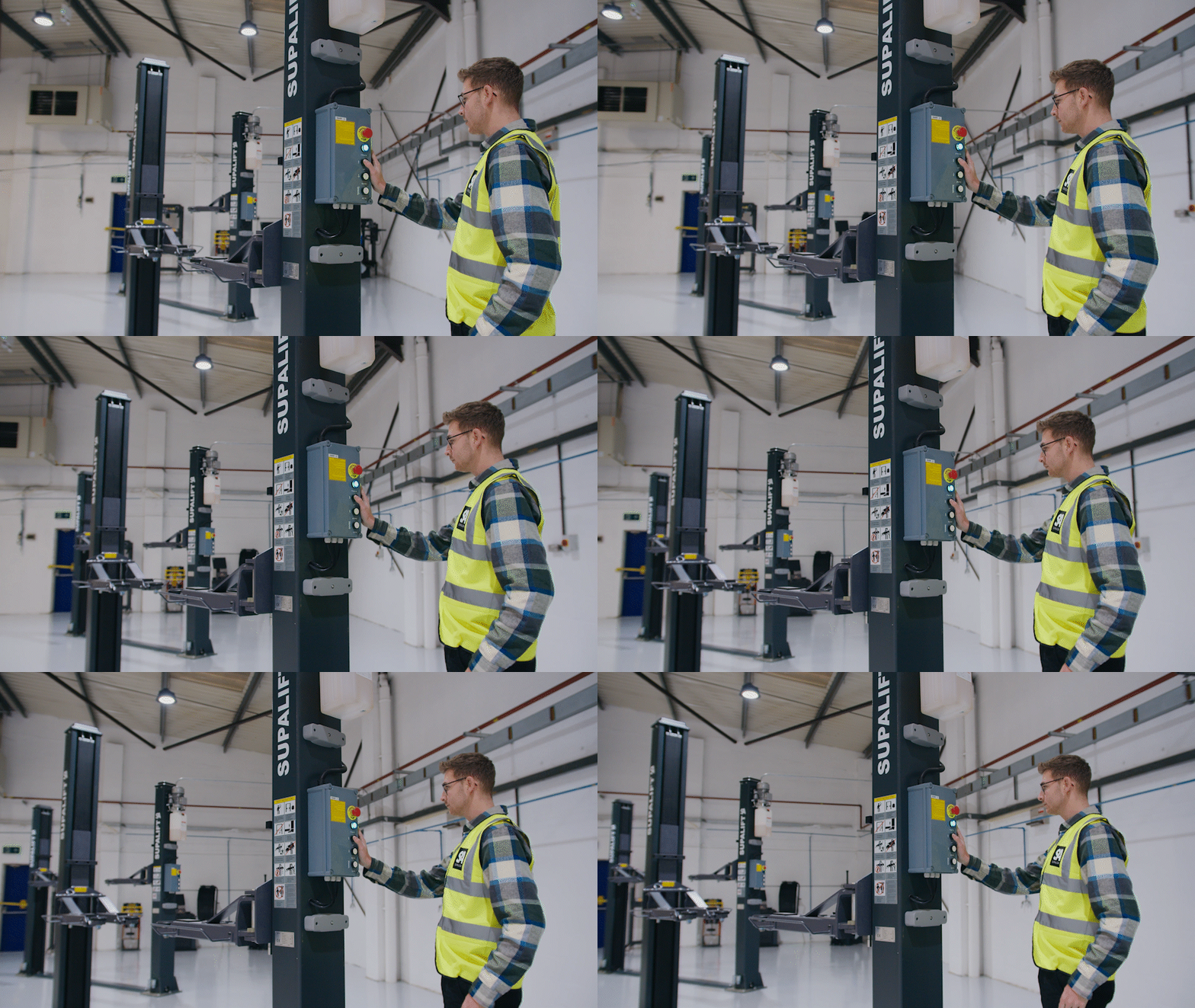
The lift you put the car on. You can't align a vehicle that isn't lifted, and not just any lift will do. Four-wheel alignment needs a lift with proper alignment provisions: turning plates at the front, slip plates at the rear, and a flat, level platform that holds the vehicle in geometric reference while measurements are taken. A scissor lift with alignment cut-outs or a four-post lift designed for alignment work is essential. If you're spec'ing a new alignment machine, spec the lift at the same time; the two have to work together. Contact our team today if you need any assistance finding the right equipment for your garage
-
Service and support. A wheel alignment machine that's down for two weeks waiting on a part is costing you alignment revenue every day. UK-based support matters, and is one of the reasons properly-distributed Ravaglioli kit holds up better long-term than imported alternatives.
-
Training. Even the best digital wheel alignment machine is only as good as the technician using it. Make sure your supplier includes proper training, the TD2.0 WIFI and RAVTD6000TB.3 both include up to four hours of on-site training as standard.
-
Software updates and vehicle databases. Vehicle specs change constantly, so a current database is essential. Commercial vehicle kit needs its own multi-brand HGV/PSV database, which is a separate consideration from passenger-car coverage.
-
Workshop layout and mobility. Fixed console machines lock you into a bay. Wi-fi systems like the TD2.0 WIFI free you up within the workshop. Fully portable systems like the RAVTD6000TB.3 free you up entirely: depots, roadside, multi-site, all viable.
Wheel alignment doesn't work in isolation
Most workshops buying alignment kit are also thinking about, or already running, the rest of the wheel care line-up: tyre changers, wheel balancers, TPMS tools, lifts, and brake testing equipment. The alignment machine sits inside that ecosystem, not on its own.
If you're upgrading or kitting out a new bay, it's worth specifying everything in the same conversation. The lift needs to suit the aligner. The tyre changer needs to suit the wheels you're working on. The Wheel balancer needs to keep up with the tyre changer. Treating it as one wheel care package rather than a series of separate purchases avoids the classic problem of buying a premium aligner and then realising the existing lift isn't suitable for alignment work.
JHM Butt supplies the full wheel care range, lifts, tyre changers, balancers, alignment kit, and the consumables that go with all of it, so you can spec the bay as a whole, not piece by piece. Contact our team today if you’re looking to upgrade your workshop.
Not sure where you sit?
If you're somewhere between two categories, or you're not sure whether to step up from your current wheel aligner machine, the honest answer is: it's worth a conversation rather than a guess. The wrong wheel alignment machine for your workshop is an expensive mistake; the right one pays for itself faster than most workshop equipment.
At JHM Butt we've been kitting out UK tyre workshops, bodyshops, commercial vehicle operations, and mobile fleet services with wheel alignment machines for years, and we'd rather help you spec the right one first time than sell you something you'll regret. Have a chat with the team and we'll point you in the right direction for your vehicle type, bay count, volume, and customer mix.
Contact our team today if you're interested in upgrading your wheel alignment machine.
June 8, 2026
|
View: 492
|
By: <a class="mp-info" href="https://www.jhmbuttco.com/blog/author/admin">Admin</a>
About the Author


What are Coil Spring Compressors?
April 21, 2023

Your Full Guide to MOT Ramps
June 6, 2022


The Requirements Needed For an MOT Bay
July 19, 2023

The Garage Jobs Worth Bringing In-House in 2026
September 3, 2026

MOT “Photos at Test” Begins: What Garages Need to Know
August 4, 2026