Top 5 Pieces of Equipment You Need in Your Garage


Top 5 Pieces of Workshop Equipment Every UK Garage Needs
Running a workshop efficiently comes down to what's on your floor. The right setup means faster turnaround, fewer comebacks, and services you can confidently charge for. These are the five pieces of kit that form the backbone of most independent garages, and what's actually worth thinking about when you're buying.
1. Vehicle Lift
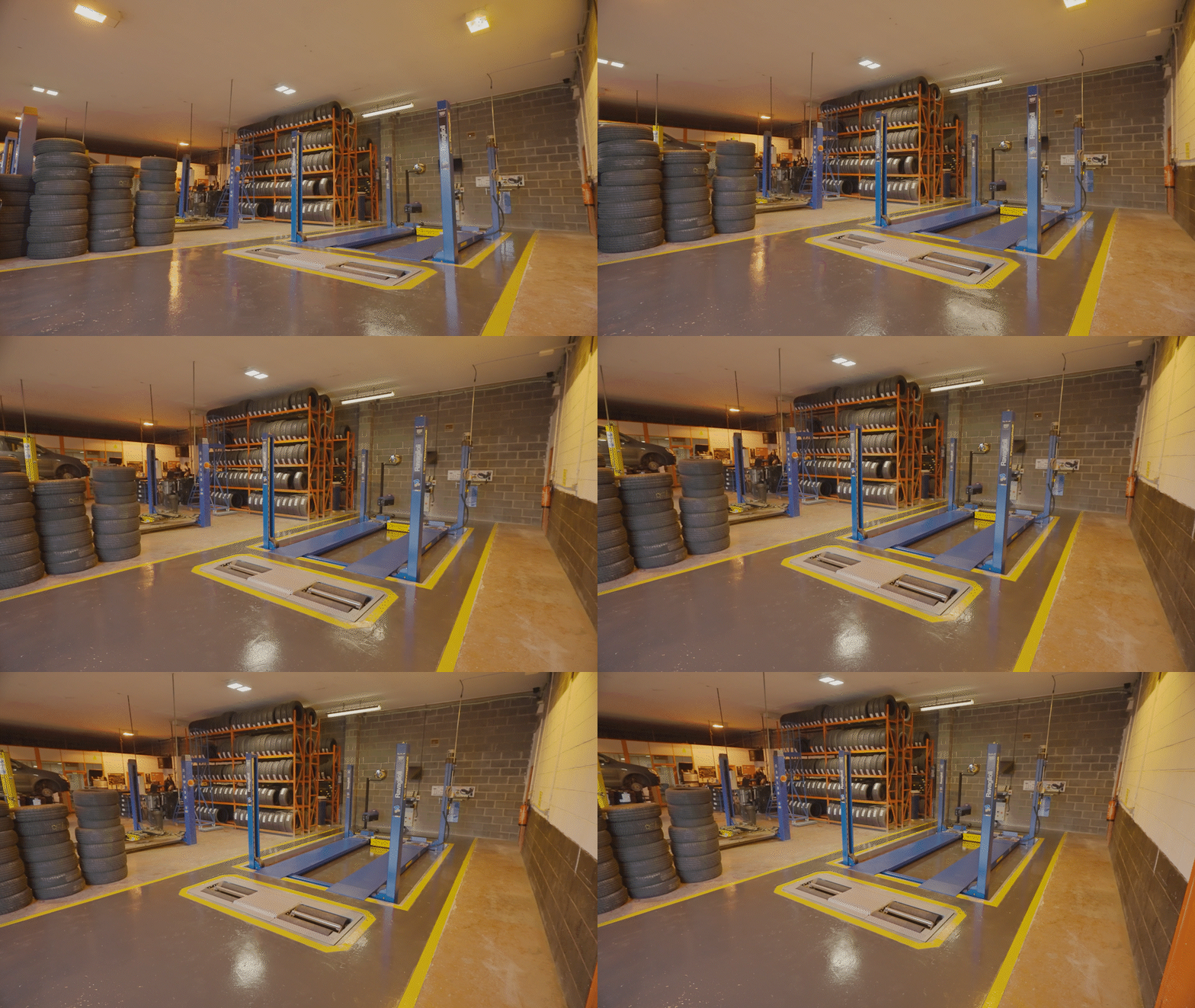
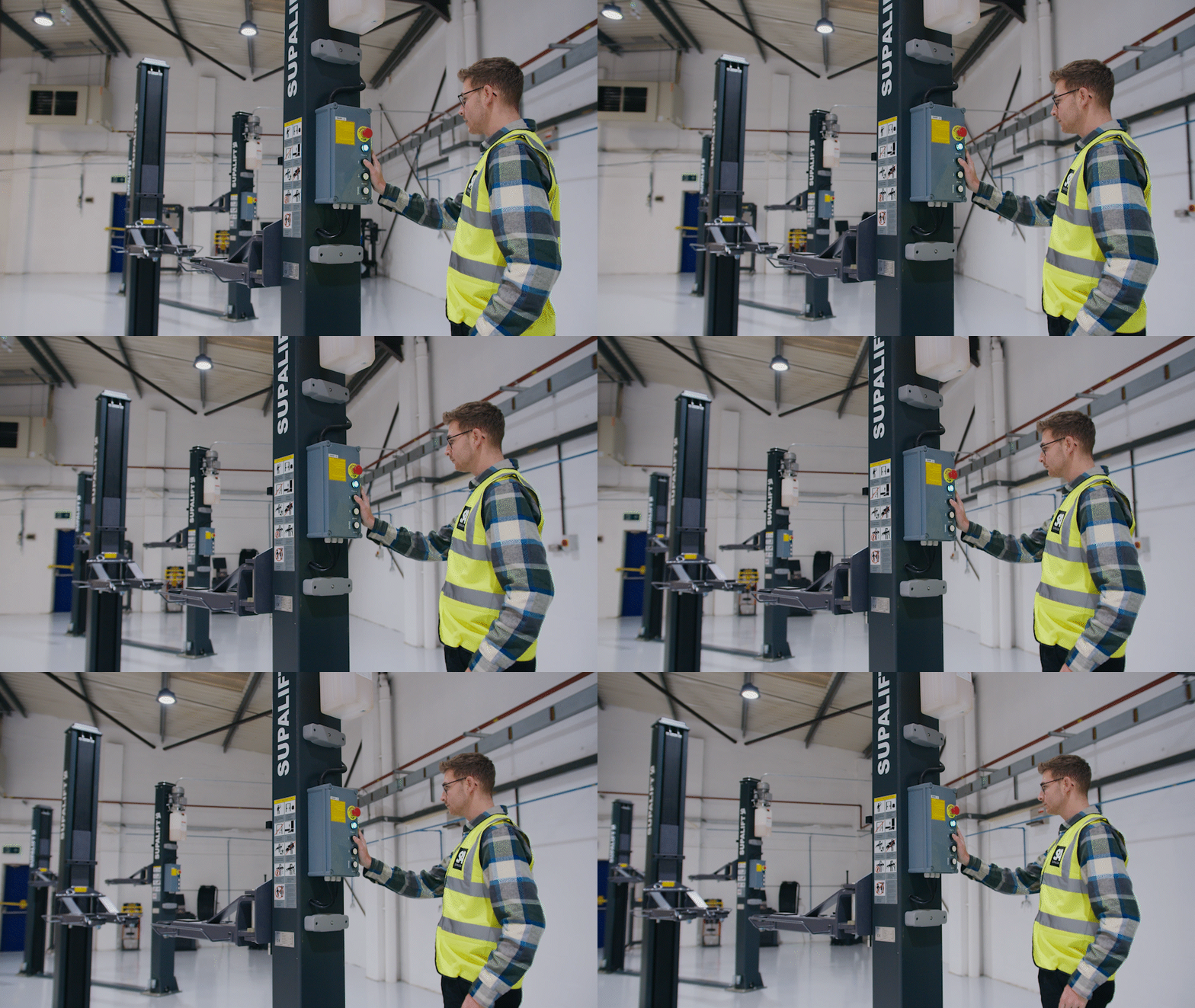
Everything else on this list becomes easier when your technicians aren't crawling on the floor. A lift is the single most impactful investment a garage can make, and it's usually the first thing a new workshop owner looks to specify.
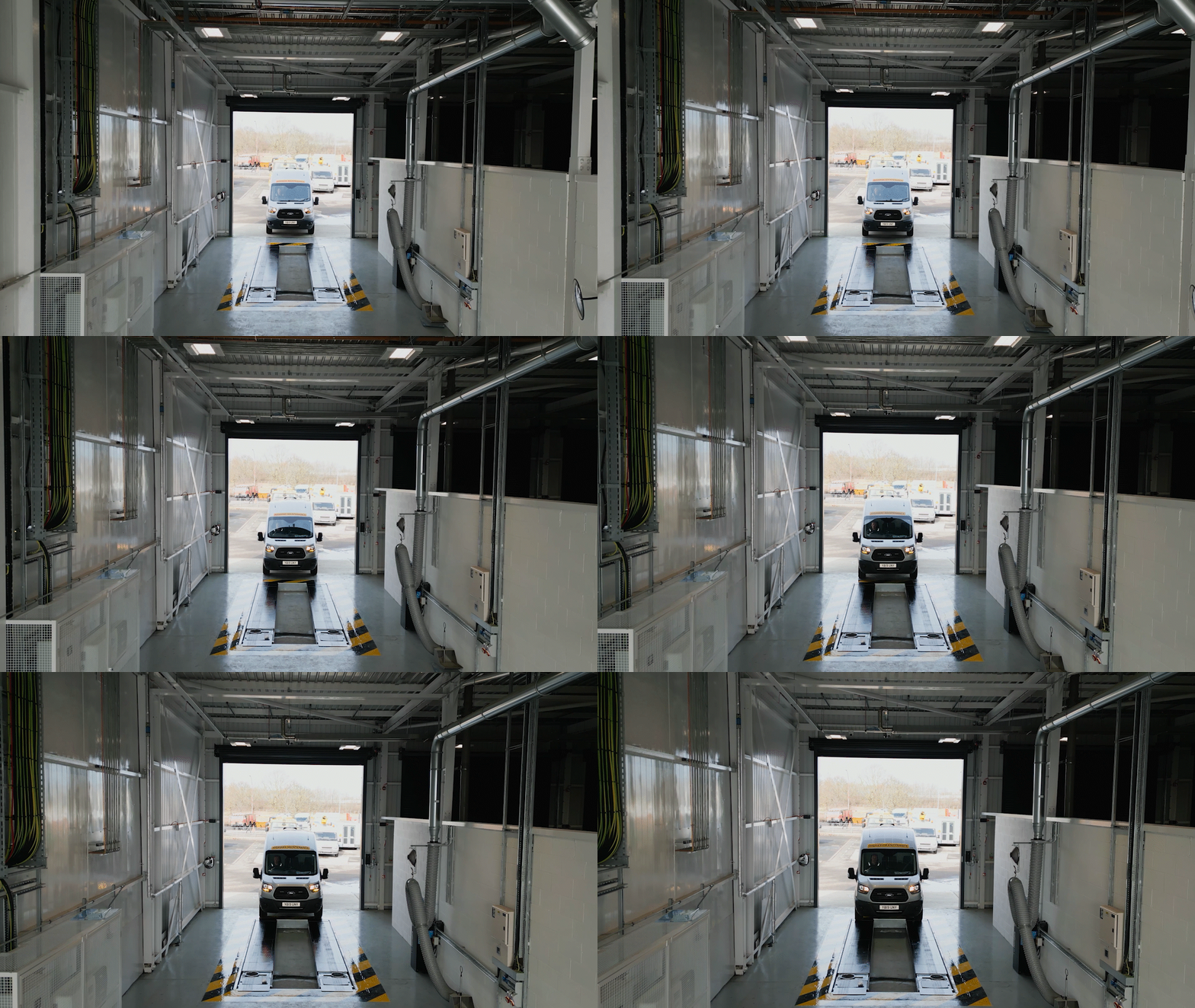
Two-post lifts are the most common choice for independents, compact, quick to operate, and suited to the majority of cars and light vans. If you're doing regular alignment work or handling larger vehicles, a four-post lift gives you a more stable platform. And if you're an MOT station running, or planning to run, Class 7 testing, that's a separate spec conversation entirely.
A few things worth checking before you buy:
-
Ceiling height: two-post lifts typically need at least 3.5–4m clearance; measure before you order
-
Rated capacity: don't underspec if you regularly work on vans; a lift that's marginal on weight won't last
-
LOLER compliance: any lift you buy should come with a thorough examination certificate, and you'll need annual inspections after that
-
Scissor vs. column: scissor lifts suit tight spaces; mobile column lifts are worth a look if you work on HGVs or buses
Accessories worth considering: rubber arm pads, jacking beam, drip trays
2. Wheel Balancer
Vibration through the steering wheel is one of the most common things customers come back unhappy about, and it's almost always a balance issue. Getting this right first time keeps customers happy and protects your reputation.
A Wheel balancer will identify where weight needs adding to smooth things out. When you're comparing machines, look at:
-
Automatic measurement: a balancer that reads diameter and width automatically makes a real difference on a busy bay
-
Alloy wheel modes: non-negotiable if you're working on premium or performance cars
-
TPMS compatibility: with TPMS standard on most modern vehicles, a balancer that flags sensor positions will save you comebacks
Accessories worth considering: Clamp protection kit, tyre lever protection sleeve, Rim Protector
3. Tyre Changer
If your tyre changer can only handle standard fitments, it's already a liability. Run-flats, low-profile rubber, and oversized alloys are now routine, even for garages that don't specifically push tyres as a service.
The spec points that actually matter:
-
Bead assist arm: without one, low-profile and run-flat tyres are a fight every time, and alloy damage becomes a real risk
-
Touchless operation: customers notice scratched wheels; the ones with expensive alloys definitely will
-
Clamp range: check both ends; too narrow and you can't handle older small cars, too low a maximum and you'll struggle with modern SUVs
If you're buying a tyre changer and balancer at the same time, a matched pair from the same manufacturer is usually the tidier option, simpler training, simpler servicing.
Accessories worth considering: tyre mounting paste, bead seater, wheel lift assist,
4. Engine Diagnostic Scanner
Modern cars are computers on wheels, and diagnostic tools are how you talk to them. If you're still relying on a basic code reader, you're leaving a lot of diagnostic capability, and revenue, on the table.
What makes the difference between a good scanner and a basic one:
-
Manufacturer coverage: OBD2 is universal, but deep access to ABS, airbag, gearbox and TPMS modules varies a lot between tools
-
Live data: watching sensor readings in real time while the engine runs often tells you more than any fault code will
-
Bi-directional control: being able to command components directly, rather than just reading what the ECU reports, is a genuine time-saver on tricky faults
-
Update subscription: check what's included; a scanner that can't be updated goes stale quickly as new models come to market
5. Air Compressor
An air compressor underpins more of your workshop than almost any other piece of kit. Pneumatic ratchets, impact guns, spray guns, tyre inflators, blow guns, a lot of the speed in a fast-turnaround workshop depends on having reliable compressed air available when you need it.
What to focus on when you're specifying:
-
CFM output, not just tank size: cubic feet per minute is how much air the compressor can continuously supply; that's the number that tells you whether it'll keep up with demand
-
Receiver size: for a busy bay, a 100–200 litre receiver gives you the buffer you need; smaller units will have the motor cycling constantly under load
-
Oil-lubricated vs. oil-free: oil-lubricated compressors are quieter, last longer, and handle sustained use better; oil-free suits lighter use and situations where air contamination matters, like spray painting
-
Single-phase vs. three-phase: three-phase is more efficient for larger workshop compressors, but check your power supply before you commit
Getting the setup right from the start
These five aren't aspirational; they're the baseline for a workshop that can handle the modern car parc without turning work away. Get them right, and most of what comes through the door is something you can do.
JHM Butt has been supplying UK garages with workshop equipment for over 50 years. Whether you're fitting out a new workshop or replacing ageing kit, the team can help you spec the right setup for how you work.
Call 01302 710868 or email sales@jhmbuttco.com
FAQs
What is the most important piece of equipment for a garage? A vehicle lift, almost without exception. It unlocks underbody work, speeds up routine jobs, and makes the workshop safer for your technicians. Most garages find everything else becomes easier once the lift question is settled.
What should I look for when buying a tyre changer? Bead assist arm capability and maximum rim diameter are the two that matter most. If you're servicing modern vehicles, you'll encounter low-profile tyres and large-diameter alloys regularly; a basic entry-level machine will let you down.
Do I need a Class 7 MOT lift? Only if you're approved, or planning to apply, to carry out Class 7 MOT tests on vehicles over 3,000kg. For standard Class 4 work, a two-post or scissor lift is fine.
What size air compressor does a garage need? For a two-bay workshop running pneumatic tools regularly, a 150-litre receiver and 14+ CFM output is a sensible baseline. Larger setups or spray booths will need considerably more.
About the Author