We use cookies to make your experience better. To comply with the new e-Privacy directive, we need to ask for your consent to set the cookies. Learn more.


The Biggest Mistakes Garages Make When Buying a 2 Post Lift (And How to Avoid Them)


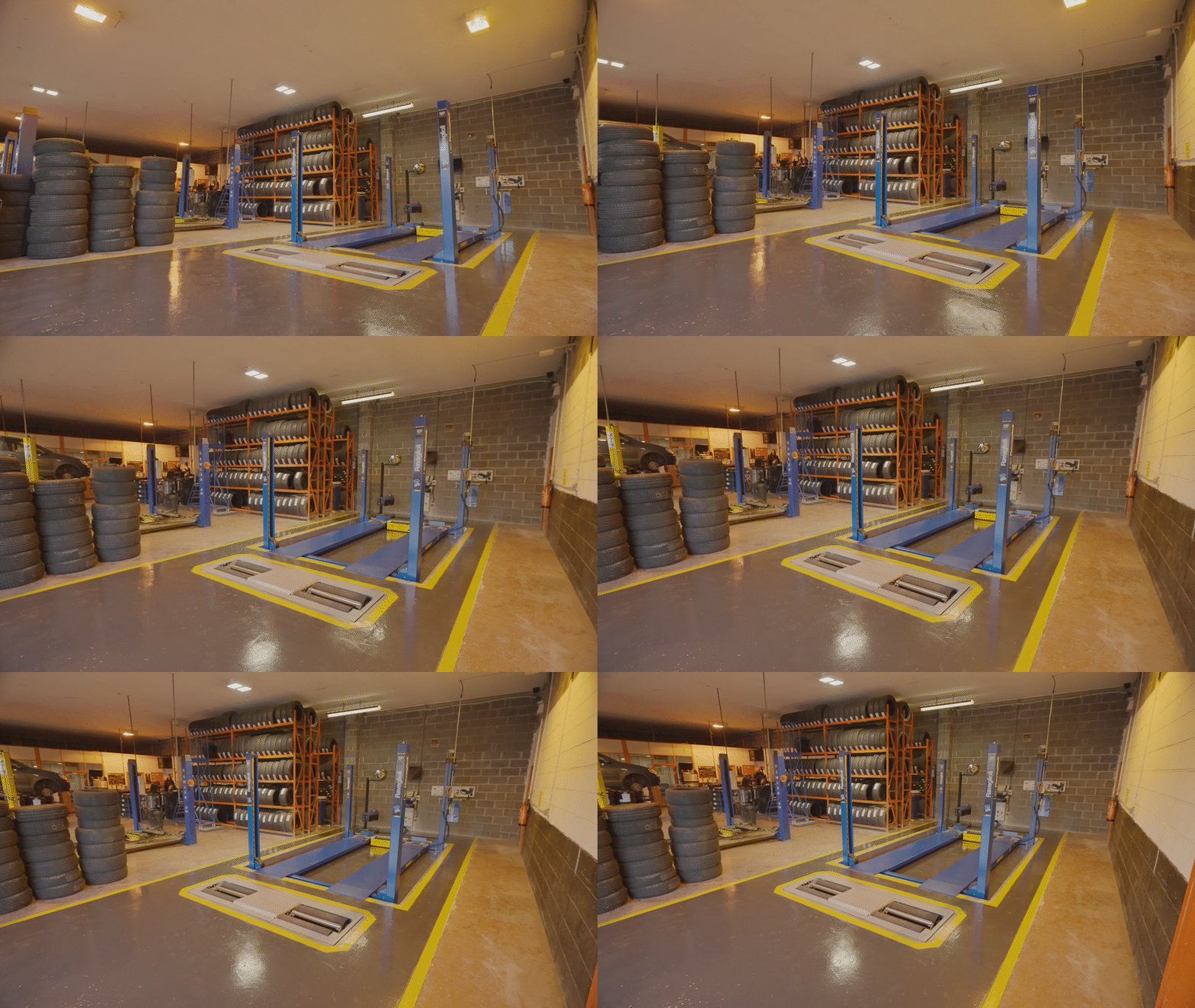
For many small independent garages across the UK, a 2 post lift is the backbone of the workshop. They’re used every day. They generate revenue every hour they’re operating. They directly affect technician safety, workflow efficiency and the types of vehicles you can accept.
But choosing the wrong two-post lift can cost far more than the initial purchase price.
-
A lift being out of action, even if just for a few days, means lost labour hours.
-
A failed inspection can stop a bay from generating revenue immediately
-
Insufficient lifting capacity can limit the vehicles you’re able to service as modern cars get heavier and larger.
In a commercial workshop environment, downtime isn’t just frustrating; it's expensive.
Yet many garages still rush the buying decision when investing in two-post lifts, often focusing on upfront cost rather than long-term performance, compliance, and reliability. By skimping out on an initial cost, your investment can quickly spiral due to the costs of repairs and servicing.
If you’re planning to invest in new two-post lifts for your workshop, here are the biggest mistakes garages make, and how to avoid them.
Key takeaways when buying two post lifts
-
Definitely avoid choosing a 2 post lift based on price alone
-
Think in terms of 10-15 year ROI, not short-term savings
-
Make sure that your concrete meets installation requirements
-
Consider the arm configuration and workshop layout carefully

Mistake 1: Choosing a 2 post lift based on Price Alone
It’s common for garages to compare 2 post lifts purely on the cost. On paper, many 2 post lifts look similar because they have the same lifting capacity, the same basic design, and the same overall dimensions.
However, a 2 post lift isn’t just a natural metal frame with hydraulics. Their key differences are often in the details:
-
Motor and hydraulic quality
-
Cable and chain durability
-
Arm restraint systems
-
Locking mechanisms
-
Daily duty cycle rating
-
Overall structural rigidity
You could have two lifts that are both rated at 4 tonnes, but how they handle that weight, repeatedly, every day, is where quality shows.
A 2 post lift in a busy independent garage may raise and lower vehicles 15-25 times a day. Over a year, that’s thousands of cycles.
Lower-quality 2 post lifts can lead to problems such as faster wear on cables and pulleys, inconsistent lifting speed, increased maintenance downtime, premature component replacement, and more frequent engineer callouts.
That’s where the “savings” on the 2 post lift quickly disappear.
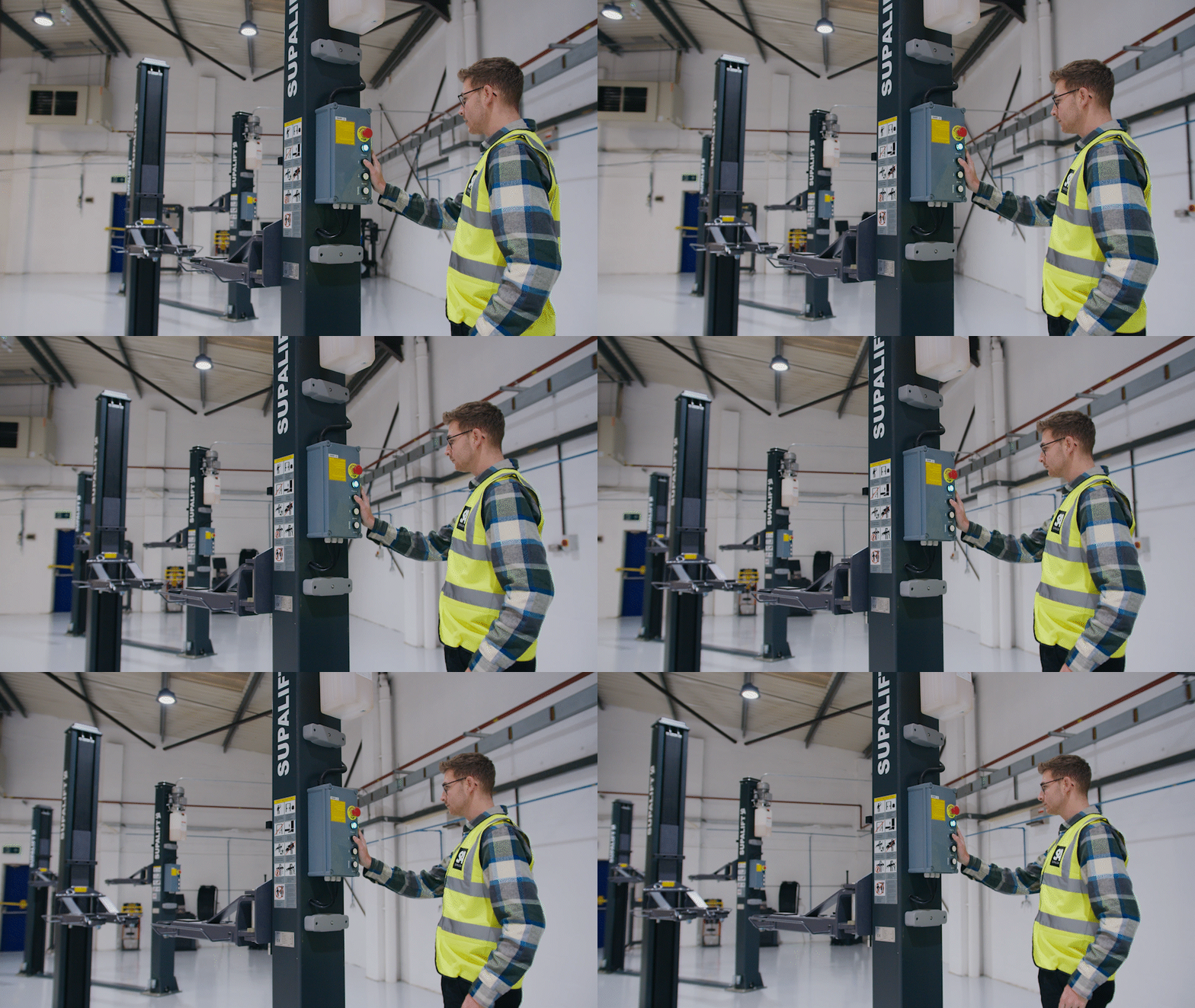
For a small independent garage, reliability matters more than the marginal upfront savings. Established manufacturers such as Ravaglioli and Supalift are engineered for consistent daily commercial use. With stronger components, smoother operation and proven longevity in UK workshop environments.
When choosing a 2 post lift, you should avoid asking: “What’s the cheapest option?”
And definitely be thinking: “Which 2 post lift will still be working reliably in 10 years?”

Mistake 2: Not checking the concrete and floor requirements
Before you install a 2 post lift, you need to assess your workshop, specifically your flooring and its suitability for a 2 post lift. This is really important as it’s fundamental to safety and compliance.
What Are The Concrete Requirements For Installing Two Post Lifts?
Most professional 2 post lift models require the following:
-
150-200mm reinforced concrete
-
Sound, crack-free slab condition
-
No expansion joints within the anchor zone
Older industrial units and converted buildings often don’t meet these specifications, so it’s really important to check this.
Installing a 2 post lift on inadequate concrete can result in Anchor movement, failed inspections, Insurance complications, and safety risks. Therefore, before committing to a 2 post lift, it’s important to confirm your groundworks are suitable. If unsure, a site survey removes guesswork and ensures the lift is installed correctly from day one.

Mistake 3: Not Checking Your Electrical Supply Before ordering Two Post Lifts
Another Mistake we regularly see is garages focusing on capacity and layout while overlooking their electrical supply.
Not all two-post lifts operate on the same power configuration. Most 2-post lifts are available in either single-phase (typically 230V) or three-phase (typically 400V). The difference isn’t minor; it affects performance, installation and long-term usability.
Many smaller or older industrial units only have single-phase power installed. However, higher duty two-post lifts are often designed to run on three phase supply. Three-phase motors generally provide smoother operation, improved efficiency and better performance under repeated daily lifting cycles. In busy workshops, that consistency makes a noticeable difference.
Problems arise when a three-phase two-post lift is ordered without confirming the building's power supply. Installation can stall while electrical upgrades are arranged, leading to unexpected costs, rewiring work and downtime.
Upgrading from single-phase to three-phase isn’t always straightforward. Depending on the property and local supply capacity, it can involve high additional costs.
Before you invest in a two-post lift, it’s worth confirming what power supply your workshop currently has and whether your distribution board can support the lift safely.
In some independent garages, a high-quality single-phase, two-post lift is perfectly adequate. However, in higher volume environments, three-phase may offer better long-term performance and durability. The key is matching the lift to the infrastructure, not assuming capability.

Mistake 4: Choosing the wrong capacity for your vehicle mix
Vehicle design has changed significantly over the past decade. Modern vehicles are: Heavier, Longer, Wider, and more complex underneath. Electric vehicles in particular can carry substantial battery weight, altering load distribution.
While a 3-tonne 2-post lift may be suitable for certain applications, many garages are also going for 4 tonne or above to provide flexibility.
This ensures the 2 post car lift can comfortably handle:
-
SUV’s
-
Long wheelbase vans
-
Hybrid vehicles
-
Future EV models
Choosing the correct capacity 2 post lift also reduces strain on components and improves their long-term durability.
A 2 post lift should not operate constantly at its upper limit. Choosing a 2 post lift model that allows a bit of headroom in weight capacity contributes to smoother operation and longer service life.
When you’re planning for growth, it’s worth considering not just today's vehicles you work on, but what you expect to be servicing in 5 to 10 years.

Mistake 5: Overlooking Arm Configuration and Workshop Layout
Not all 2 post lift designs are identical. Arm reach, pad adjustment and column configuration affect how easily you can position vehicles and open doors. In smaller independent garages where space is tighter, layout planning is essential.
Before installing, consider:
-
Bay width
-
Door opening clearance
-
Access to toolboxes
-
Vehicle entry angle

Mistake 6: Ignoring ongoing compliance and inspection requirements
In the UK, all vehicle lifts used commercially must comply with LOLER regulations and undergo regular inspection.
When buying a 2 post lift, you should ensure that you have proper certification documentation, UK/CA compliance, Access to parts and servicing, and clear installation records.
If a lift fails the inspection and parts are unavailable, it cannot legally be used.
That’s not just an inconvenience for your garage; it directly impacts your revenue. Working with an established UK supplier like JHM Butt ensures that you’re supported long after installation.

Mistake 7: Not thinking long-term
It’s really important to understand that a 2 post lift isn’t a short term purchase that you just buy and forget about.
It’s one of the main components of a garage. Therefore, it’s important to consider:
-
Manufacturer reputation
-
UK support availability
-
Instalation Expertise
-
Future expansion plans
-
Finance options if required
The right 2 post lift increases efficiency, supports heavier vehicles and becomes a core revenue asset for your workshop.
A 2 post lift is a core business asset
For most garage workshops in the UK, a 2 post lift isn’t simply equipment. It affects:
-
How efficiently jobs are completed
-
How safely technicians work
-
How quickly vehicles can be turned around
-
What types of vehicles you can accept
When chosen correctly, a 2 post lift increases workflow efficiency and supports long-term business growth.
When the choices are rushed and focused on the cheapest option, it can really hinder your workflow and income.
Taking the time to assess your space, the types of vehicles that you work on daily, and your long-term plans ensures you install a 2 post lift that supports your workshop, not one that your workshop outgrows within a few years.
Final thoughts
Buying a 2 post lift shouldn’t be rushed. For small independent garages, it’s a key operational investment, one that affects safety, workflow and profitability. By checking floor suitability, ceiling height, vehicle capacity and long-term support before you commit, you ensure the light you install works for your business, not against it!
At JHM Butt & Co, we supply and install 2-post lifts across the UK, with site surveys available and finance options through trusted partners.
If you’re planning to upgrade or install a 2 post lift, speak to our team for practical, expert advice tailored to your workshop.
February 26, 2026
|
View: 1257
|
Categories: Blog
| Tags: <a class="mp-info" href="https://www.jhmbuttco.com/blog/tag/mot-bays">MOT Bays</a>
|
By: <a class="mp-info" href="https://www.jhmbuttco.com/blog/author/admin">Admin</a>
About the Author



What are Coil Spring Compressors?
April 21, 2023

Your Full Guide to MOT Ramps
June 6, 2022


The Requirements Needed For an MOT Bay
July 19, 2023

The Garage Jobs Worth Bringing In-House in 2026
September 3, 2026

MOT “Photos at Test” Begins: What Garages Need to Know
August 4, 2026